

1.What is mesh mesh nebulizer?
The mesh nebulizer is a method that disperses the drug into tiny mist or particles and suspends it in the air. The drug "mist" enters the respiratory tract and lungs for deposition through breathing inhalation, cleans the airway, and humidifies the airway, thereby A medical device that achieves the purpose of painless, rapid and effective treatment.
It is mainly used to treat various upper and lower respiratory diseases, such as cold, fever, cough, asthma, pharyngitis, rhinitis, bronchitis and other diseases.
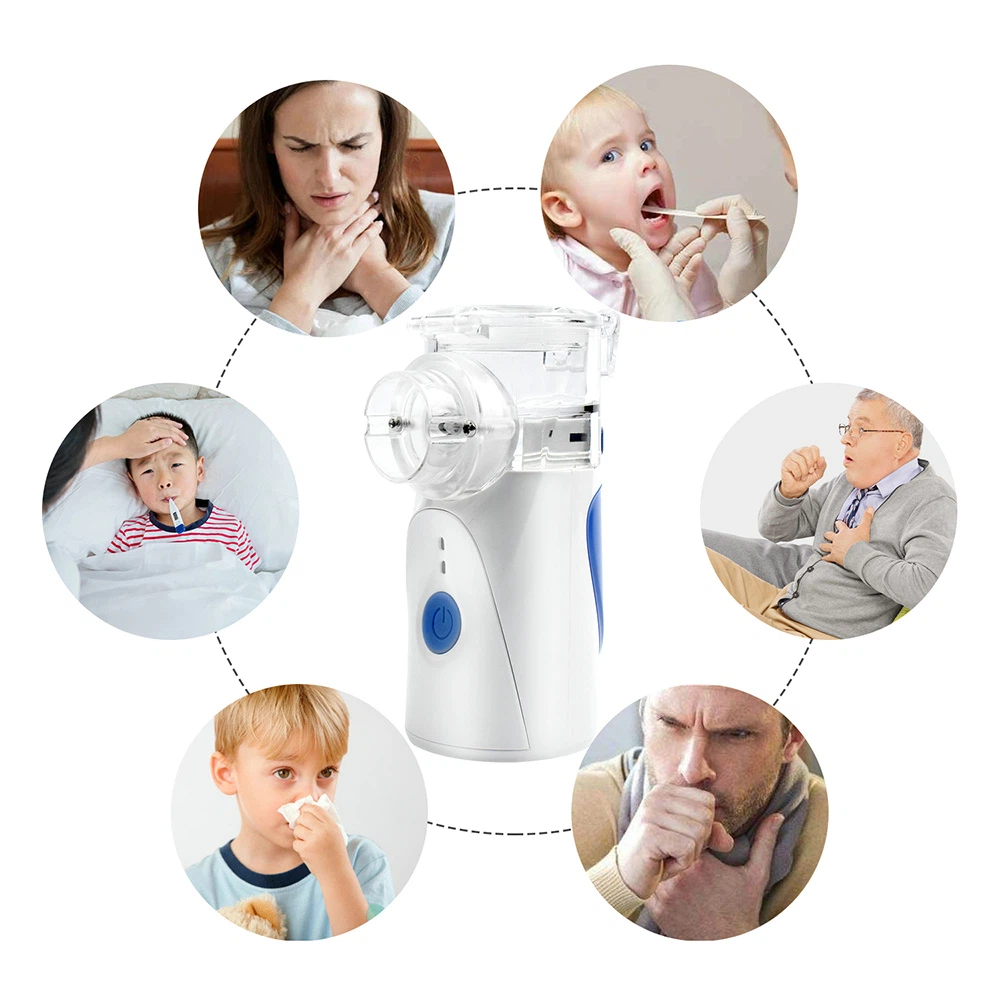
2. Advantages of atomization therapy:
Compared with the traditional medicine treatment, the mesh nebulizer atomizes the liquid medicine into tiny particles, and the medicine enters the respiratory tract and lungs for deposition through inhalation, so as to achieve painless, rapid and effective treatment.
Nowadays, atomized inhalation is more and more recognized by clinicians, because it is administered locally, and the drug is directly inhaled through the mouth and nose into the respiratory system to take effect, which is more efficient than oral/injection, especially suitable for children.
3.Precautions for using the mesh nebulizer:
Children under the age of 3 should be treated with a face mask mesh nebulizer. It is not necessary for the child to deliberately cooperate with the treatment, and the nebulization treatment can be completed when the child is awake or sleeping in a quiet state. For older children, a mouth-inPay attention to the following during atomization:
1. Older children should not eat 1 hour before nebulization, and infants and young children should not eat half an hour before nebulization. Do not apply oily facial ointment on the face to prevent the drug from adhering to the facial skin; rinse your mouth to remove secretions and food residues in your mouth as much as possible.-mouth mesh nebulizer can be used.
2. Take a comfortable position, try to take a sitting and semi-sitting position, and the mesh nebulizer should be perpendicular to the horizontal plane to achieve a better spray effect and avoid spilling the medicine.
3. Teach children the correct inhalation method, take a deep breath, so that the liquid medicine can fully reach the bronchi and lungs. The concentration of the inhaled drug should not be too high, the inhalation speed should be from slow to fast, and the amount of nebulization should be from small to large, so that children can gradually adapt. Avoid getting the medicine in the eyes. If the cough is severe, the atomized inhalation can be suspended, and the atomized inhalation can be performed after the cough symptoms are relieved. During the nebulization inhalation process, the aerosol may be irritating to the nasopharynx and gastrointestinal tract, and symptoms such as nausea and vomiting may occur. Once such symptoms occur, intermittent nebulization inhalation may be used or the nebulization inhalation treatment may be stopped.
4. After nebulizing glucocorticoid and other drugs, you should rinse your mouth to avoid drug accumulation in the pharynx and reduce adverse reactions such as fungal infection. If there is too much sputum, you can pat your back after nebulization to help expel sputum.
5. The operating procedures should be strictly followed, and medication should be prescribed by the doctor. Closely observe the reaction of the child during the nebulization process. Generally, the oxygen flow rate of the oxygen-driven nebulization should be adjusted to 6-8L/min. Once symptoms such as severe coughing, aggravated wheezing, and hiccups occur, the nebulization inhalation should be suspended.


